Guiding International Students: An End-to-End UX Case Study
Plan with Purpose
Conducted UX research across five trust-and-usability pillars, drawing on NNGroup and Baymard Institute benchmarks
Identified friction points in how international students understood application requirements and next steps
Mapped the end-to-end student pathway (U.S. and Canada) to surface where guidance broke down
Built personas and journey maps to ground design decisions in real user pain points and goals
Determined the core problem: users needed a clearer, more guided path from "researching options" to "taking action"
Explore Ideas
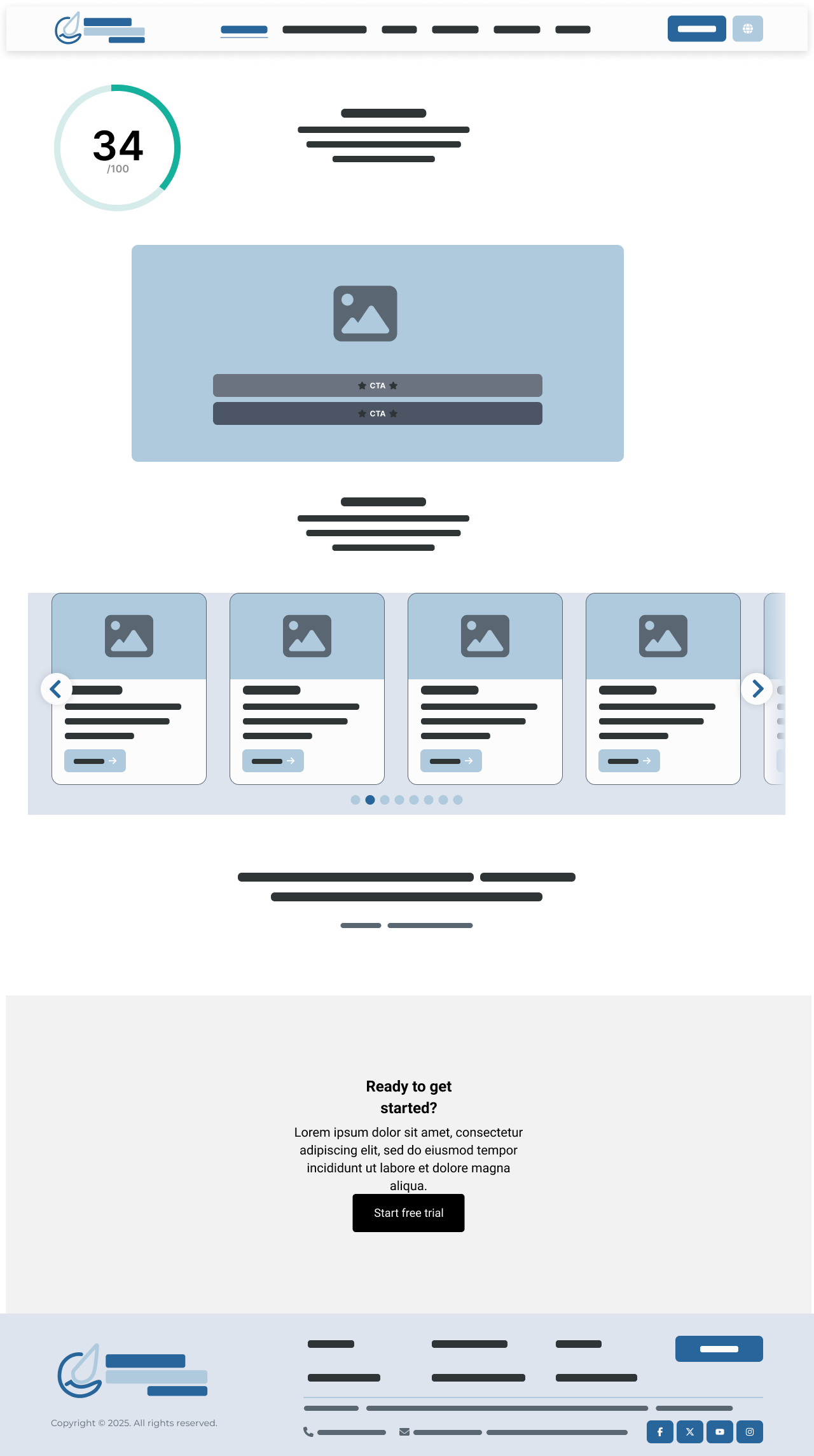
Developed a sitemap and information architecture to organize services and content around user intent
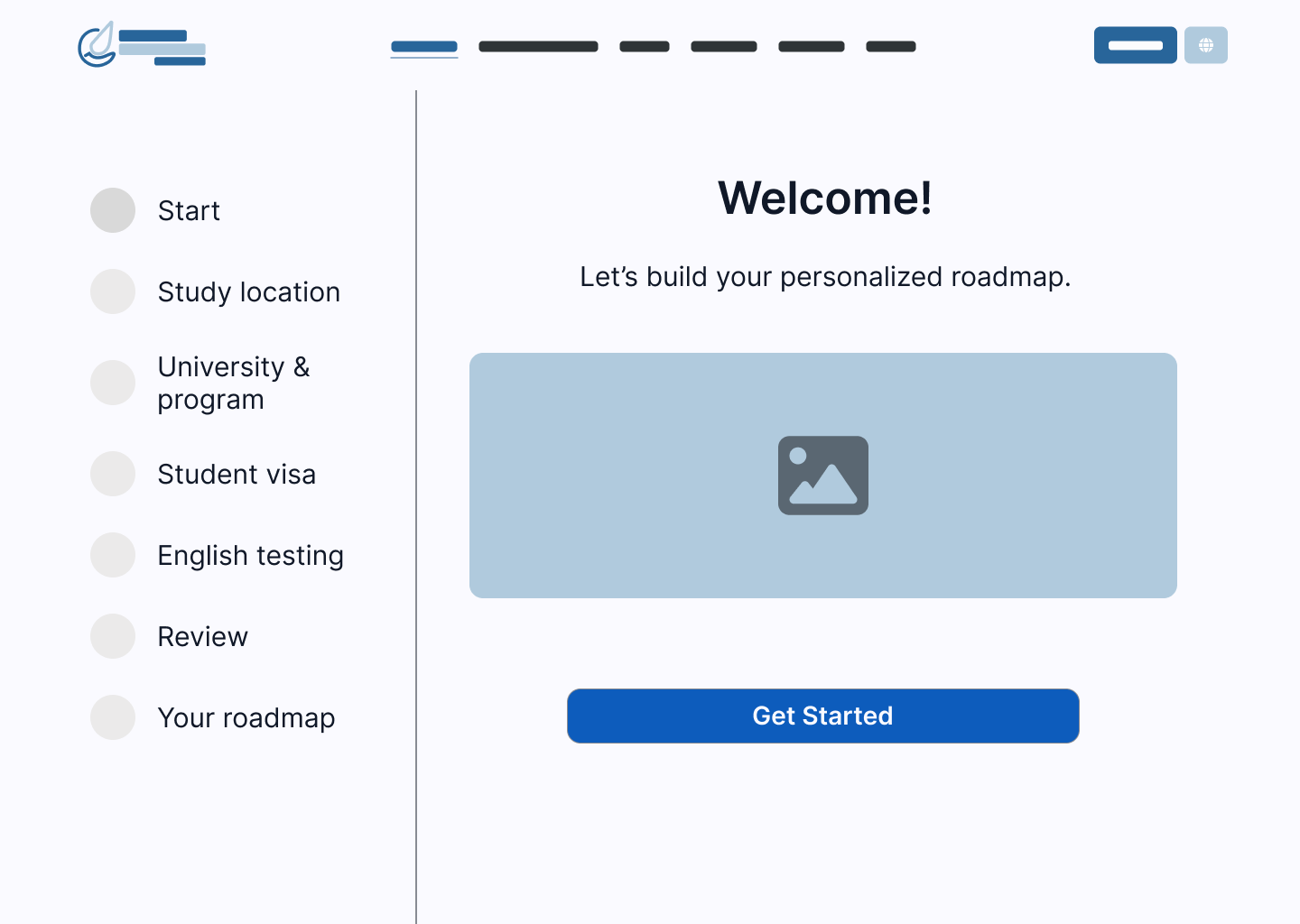
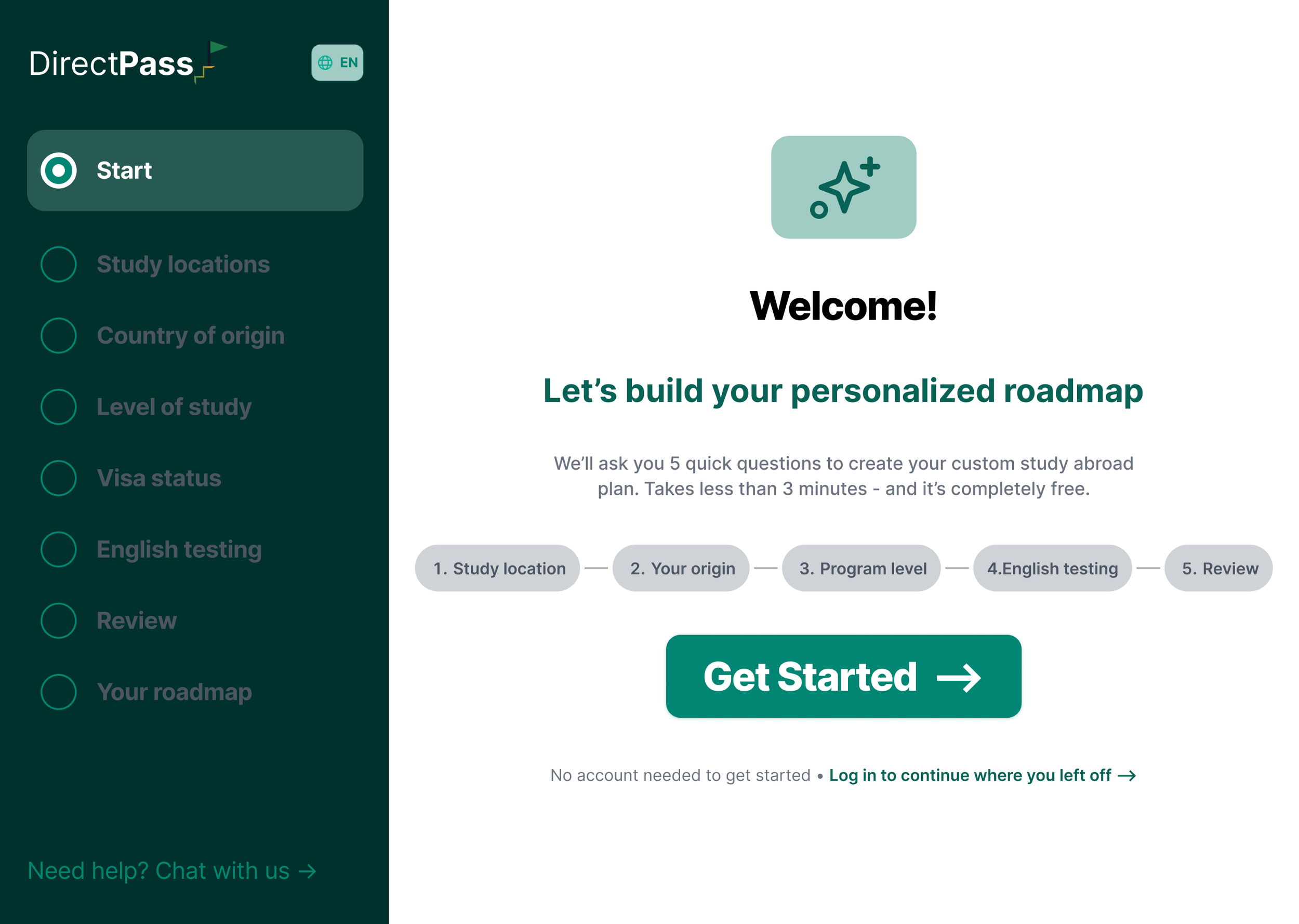
Designed lo-fi wireframes for quiz and onboarding flows, including branching logic based on user responses
Prioritized key actions (starting the quiz, finding next steps) to reduce decision fatigue
Explored navigation structures that made complex information easier to scan and act on
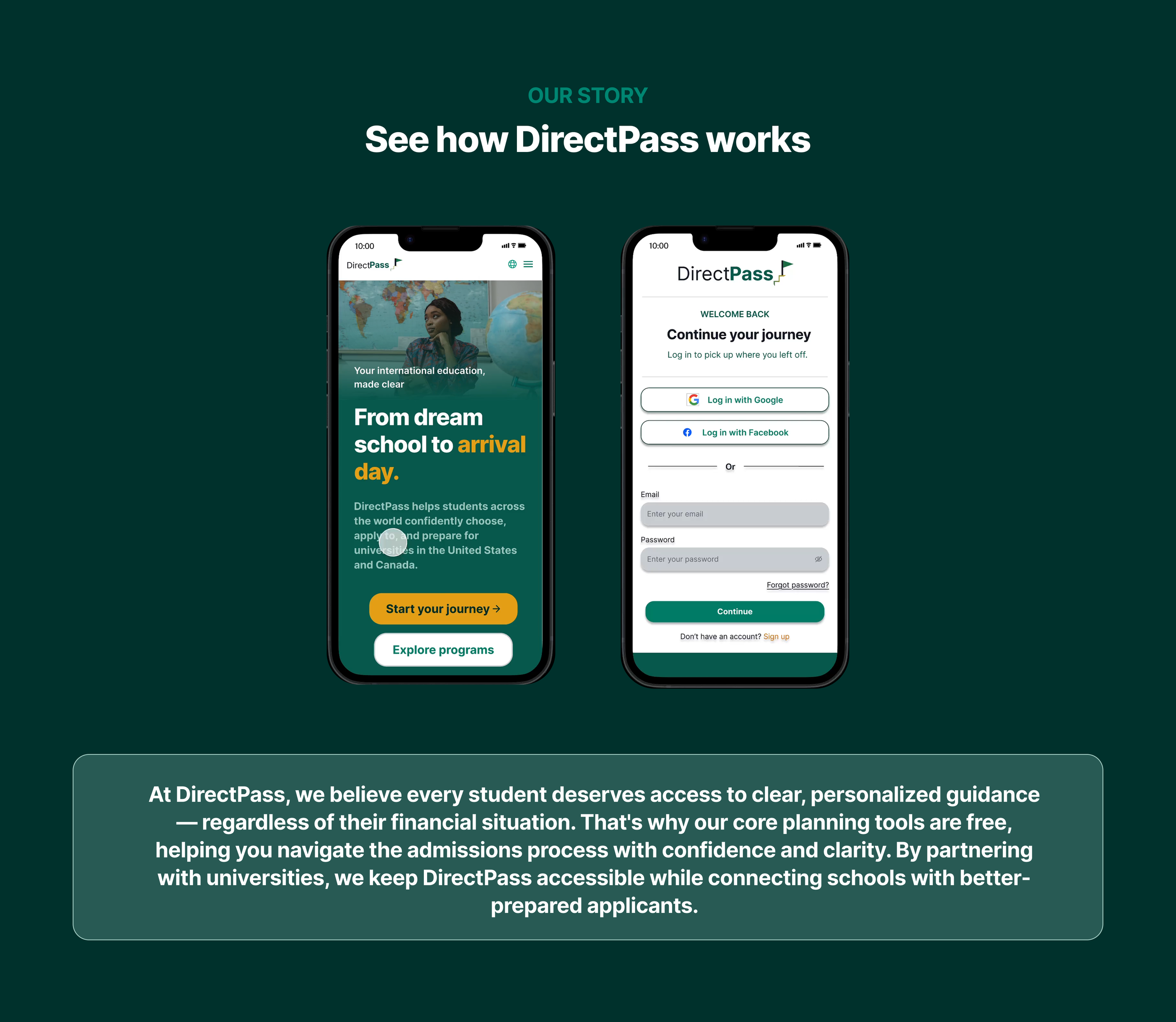
Balanced clarity and guidance with a clean, trustworthy visual tone appropriate for a student audience
Adapt as Needed
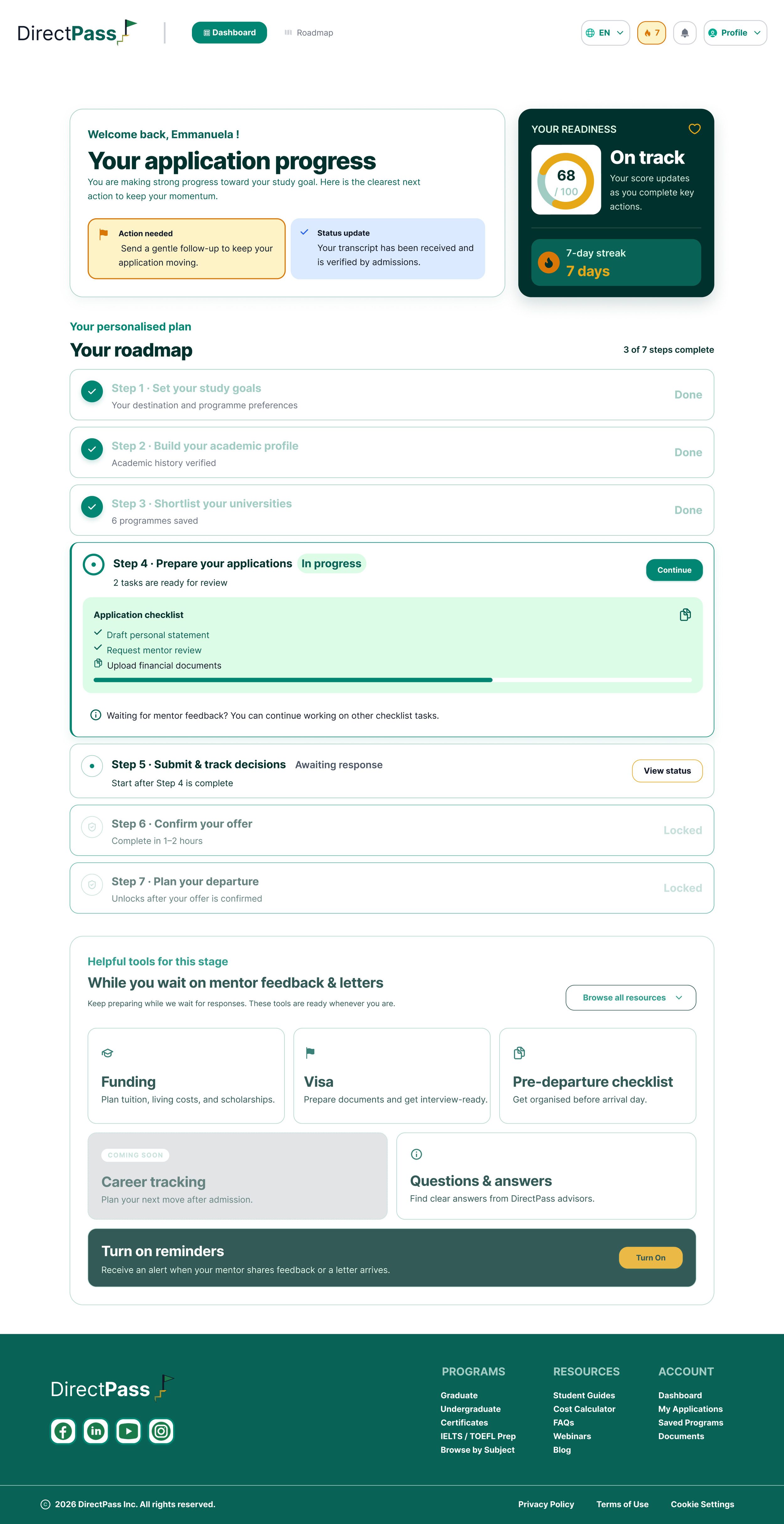
Refined wireframes into high-fidelity mockups through iterative feedback with the team
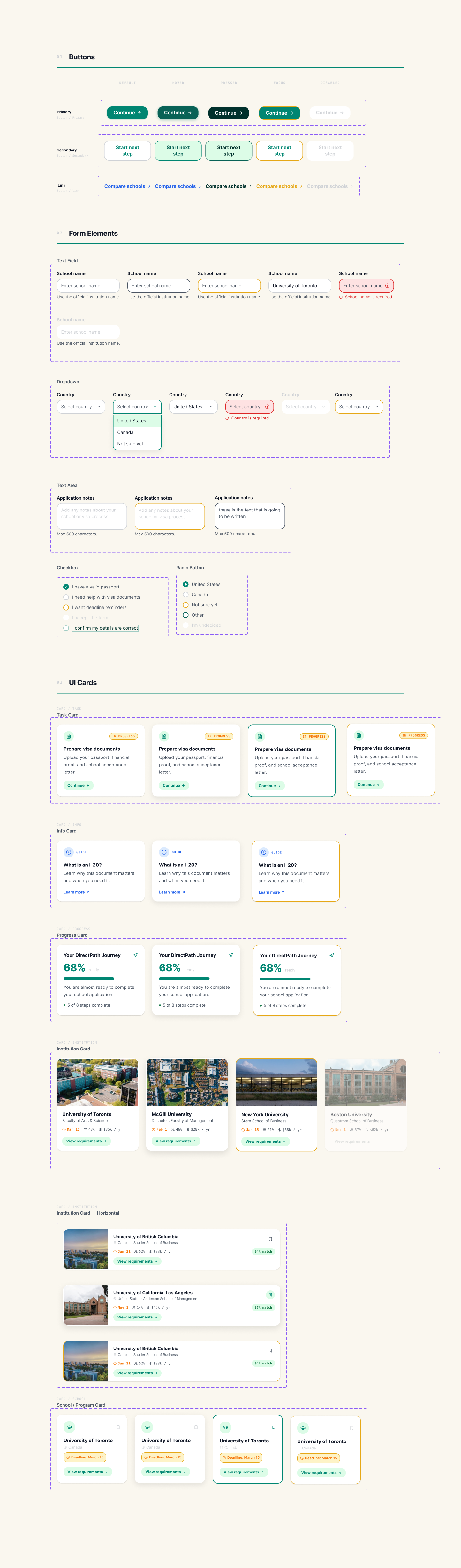
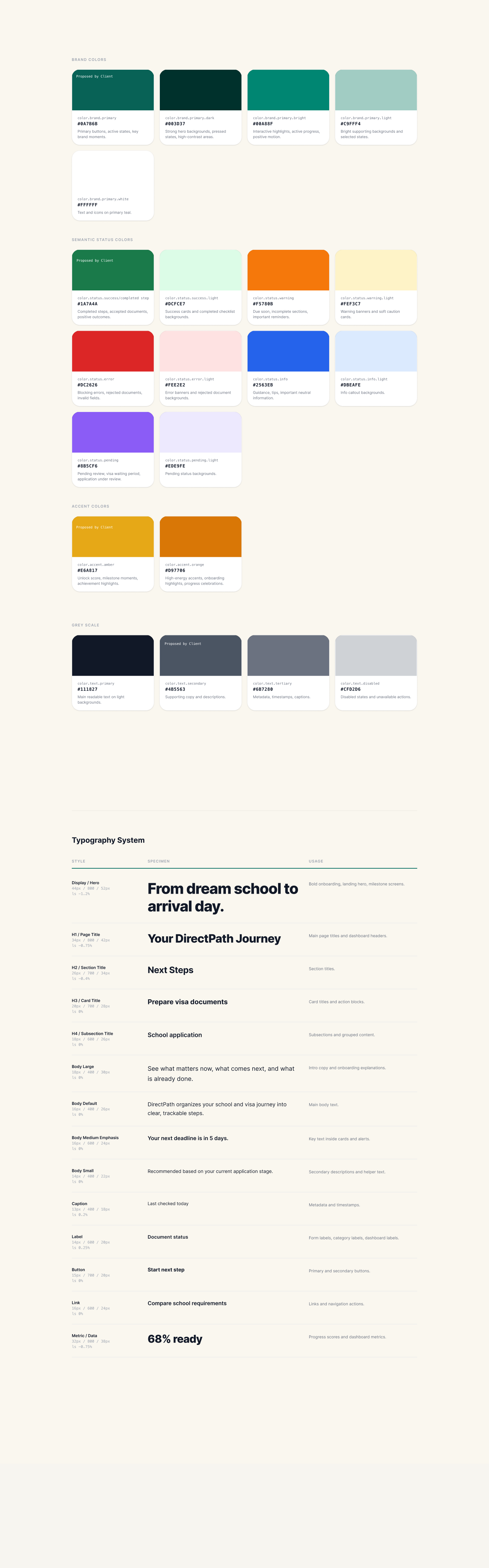
Built a UI component guide (nav bar specs, interactive states, Figma-ready documentation) to keep the design system consistent and scalable
Evaluated accessibility considerations across flows to reduce barriers for a diverse, global user base
Adjusted the onboarding and quiz logic based on where users were likely to drop off or get confused
Continuously tested design decisions against the research findings from the discovery phase
Deliver with Confidence
Delivered a complete design system, sitemap, and high-fidelity mockups ready for handoff
Produced a client-facing presentation translating research insights, personas, and design rationale into a clear narrative
Created a scalable UI component library to support future development
Strengthened the platform's ability to guide international students from confusion to a clear next step
Served as strong evidence of end-to-end, research-driven design thinking for portfolio and interview conversations